Medical Marijuana Card: How Medical Cannabis Evaluations Work
/fit-in/1024x1024/storage/images/918ca617-7ebe.jpg)
Getting a Medical Marijuana Card starts with a medical conversation - not a checkout page . Before a patient can participate in a state medical cannabis program, a qualified physician generally needs to review their health history, discuss their symptoms, and determine whether the patient meets that state's requirements.
The process can look different from one state to another. Eligibility rules, certification periods, fees, qualifying conditions, and renewal requirements are all set at the state level. That makes it important for patients to understand the rules where they live before scheduling an evaluation.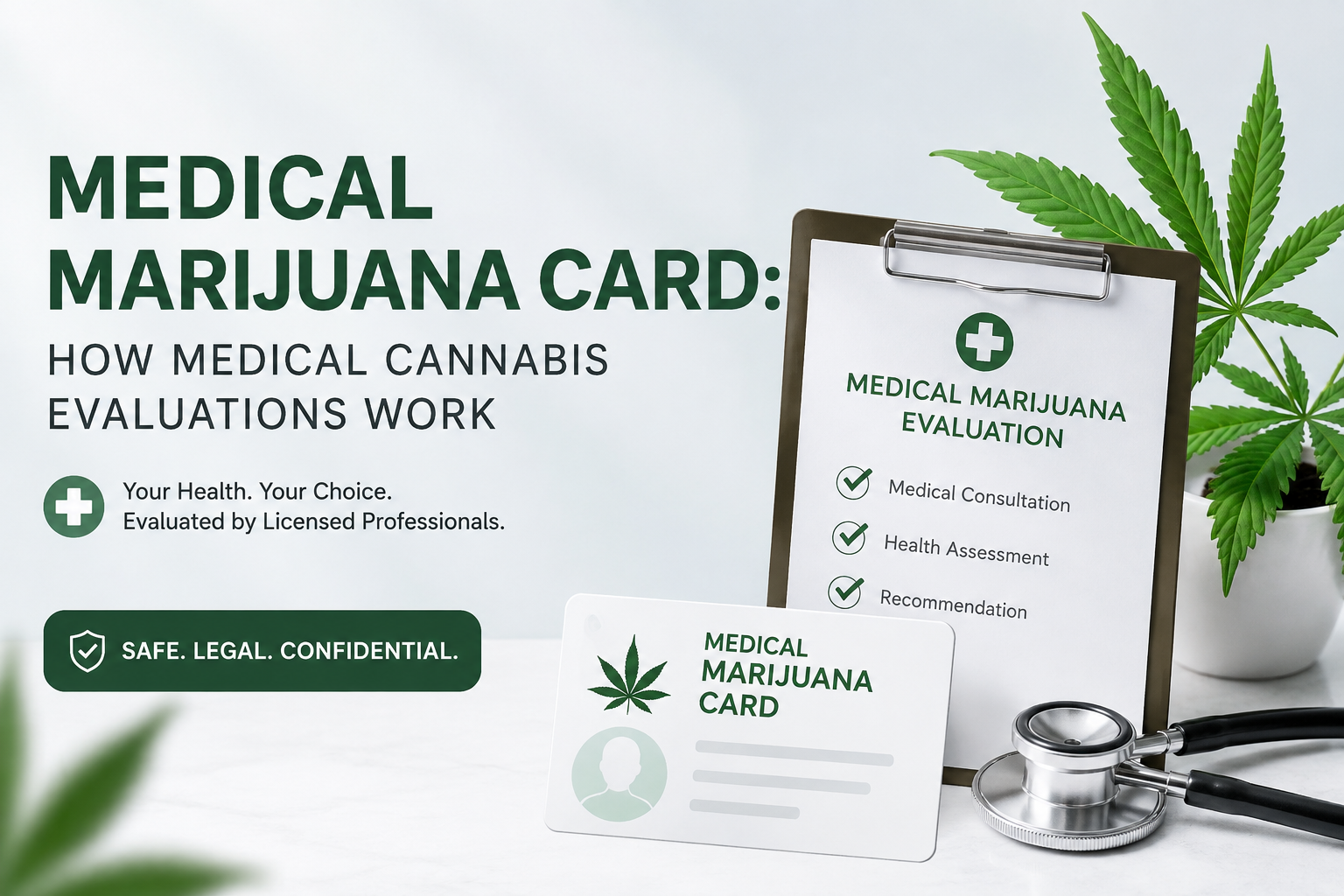
Medical Marijuana Card: Understanding the Medical Cannabis Evaluation Process
What Is a Medical Marijuana Card Evaluation?
A medical cannabis evaluation is a consultation between a patient and an authorized healthcare professional. The purpose is to determine whether medical cannabis may be appropriate and whether the patient meets the requirements of the state's program.
A physician may ask about current symptoms, previous treatments, medications, medical history, and relevant health conditions. Patients should answer honestly and provide accurate information. The goal is not simply to obtain a card; it is to give the physician enough information to make an informed medical decision.
For patients researching online Medical Marijuana Card Pennsylvania Evaluations, Pennsylvania requires patients to register with the state's program and receive certification from an approved practitioner. The certification period is determined by the practitioner and cannot exceed one year.
How a Medical Marijuana Card Evaluation Works
Although each state has its own process, most evaluations follow a few basic steps.
First, patients should identify the requirements of the medical cannabis program in their state. Some programs require proof of residency, documentation of a qualifying condition, or registration with a state patient system.
Next comes the physician consultation. During the appointment, the physician reviews the patient's medical information and discusses whether medical cannabis could provide potential therapeutic or palliative benefit. A certification is not automatic simply because someone requests one.
In Pennsylvania, the current program recognizes 24 qualifying serious medical conditions, and patients must receive certification from an approved practitioner before obtaining a medical marijuana ID card.
Preparing for a Medical Marijuana Card Evaluation
A little preparation can make the consultation more useful. Patients may want to have a list of current medications, relevant diagnoses, previous treatments, allergies, and questions about medical cannabis.
It is also useful to understand the difference between a physician's certification and the state-issued card. In many programs, the physician's approval is only one step. Patients may still need to register with the state, pay applicable fees, and complete additional requirements before they can legally purchase medical cannabis through the program.
Being prepared can also help patients explain what they hope to address and give the physician a clearer picture of their overall health history.
Medical Marijuana Card Evaluations and Telehealth
Telehealth has become another way for patients to connect with healthcare professionals, but patients should never assume that every state permits the same process.
Pennsylvania provides a useful example. The state's Department of Health says approved practitioners can issue medical marijuana certifications through synchronous interactions, including phone or video conferencing.
This is where cannabis and telemedicine can intersect. A qualified telehealth cannabis doctor can review a patient's information remotely, conduct the consultation, and determine whether certification is appropriate under the state's rules.
An online cannabis consultation can also be convenient for patients who have difficulty traveling. However, convenience should not replace a proper medical evaluation. Patients should confirm that the physician is authorized to participate in their state's program and understand what documentation is required.
Understanding what to expect during a medical marijuana evaluation helps patients prepare relevant health history and ask meaningful questions during the appointment.
How Much Does a Medical Marijuana Card Cost?
There is no single nationwide price for obtaining a Medical Marijuana Card. Costs can include the physician consultation, state registration or card fees, and other expenses depending on the program.
Pennsylvania provides a useful 2026 example. The state's Department of Health currently lists a $50 annual payment for patients, although eligible patients who qualify for certain fee reductions may pay $0. The patient's certification can last no more than one year.
That is only the state-level cost. Patients may also have to pay a separate physician consultation fee, depending on the healthcare provider.
Costs and renewal rules can differ significantly between states, and they can change over time. Patients should therefore check their state's official medical cannabis program rather than relying on an outdated article or social media post.
What Happens After a Medical Marijuana Card Evaluation?
If a physician determines that a patient meets the requirements, the next steps depend on the state. Patients may need to complete registration, submit documentation, pay a state fee, and wait for a card or authorization before purchasing medical cannabis.
The evaluation is also an opportunity to ask questions. Patients can discuss how medical cannabis fits alongside existing treatments, potential side effects, product considerations, and follow-up care.
A Medical Marijuana Card does not replace general medical care, and having one does not mean that cannabis is appropriate for every condition or every patient. The decision should remain part of an informed healthcare discussion.
Medical Marijuana Card FAQ
Do I automatically receive a card after an evaluation?
No. A physician must determine that you meet the applicable requirements, and you may still need to complete state registration and payment steps.
Can I get a Medical Marijuana Card online?
In some states, parts of the process (including physician consultations) may be available through telehealth. However, the exact rules depend on the state and the practitioner's authorization.
What should I bring to a medical cannabis evaluation?
Have relevant medical records or information available, along with a list of medications, diagnoses, previous treatments, and questions you want to ask.
Is a Medical Marijuana Card valid in every state?
No. Medical cannabis programs are governed by individual state laws. A card or certification from one state does not automatically give a patient the same rights in another state.
Do Medical Marijuana Card rules change?
Yes. States can update qualifying conditions, fees, registration procedures, certification periods, and other program rules. Checking official state information is the safest way to confirm current requirements.
Summary of the Evaluation Process
A Medical Marijuana Card evaluation is ultimately about determining whether a patient meets the requirements of a state medical cannabis program and whether medical cannabis may be appropriate for that individual.
Understanding the evaluation process, preparing accurate medical information, and checking current state regulations can make the process much easier. As telehealth becomes a more common part of healthcare access, eligible patients in states that allow remote consultations may also have more convenient ways to connect with authorized practitioners.
The most important step is to focus on an appropriate medical evaluation first and the paperwork second.
Related Posts
/fit-in/1024x1024/storage/images/83b621a0-78db.jpg)
/fit-in/1024x1024/storage/images/518e79c7-384c.jpg)
/fit-in/1024x1024/storage/images/1b01df38-bb0c.jpg)
/fit-in/1024x1024/storage/images/d949c0f7-0e36.jpg)
/fit-in/1024x1024/storage/images/922ddff7-96b4.jpg)
/fit-in/1024x1024/storage/images/dcb65276-e01a.jpg)
/fit-in/1024x1024/storage/images/f4f913f1-34a4.jpg)
/fit-in/1024x1024/storage/images/8d9100c5-aec5.jpg)
/fit-in/1024x1024/storage/images/735afddb-8058.jpg)
/fit-in/1024x1024/storage/images/b98f3ad4-952e.jpg)